Our History On Camden St.
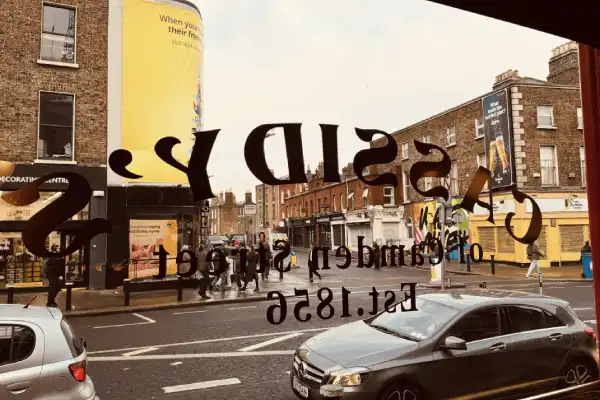
The area of Camden Street has for centuries been central to the evolutionary narrative of Dublin. The current thoroughfare came into being as part of the medieval route from the southern suburb of Rathmines into Dublin city. As the decades rolled by, so did the growing importance of Camden Street, which in the 18th century was named in honour of the 1st Earl of Camden.
At this time, Camden Street was the home of Dublin’s affluent citizenry becoming the fashionable stronghold of the Ascendancy, and the many officials who had affiliations with Dublin Castle. In the 19th century, Camden Street took on a decidedly mercantile manifestation as the professional classes, leading retail stores and a new age of street traders brought a bustling vitality to the area. This increased footfall was good news for Camden Street’s grocers and vintners and also heralded the arrival of new licensed premises, some of whom would later enter the illustrious annals of Dublin’s famous heritage and literary pubs.
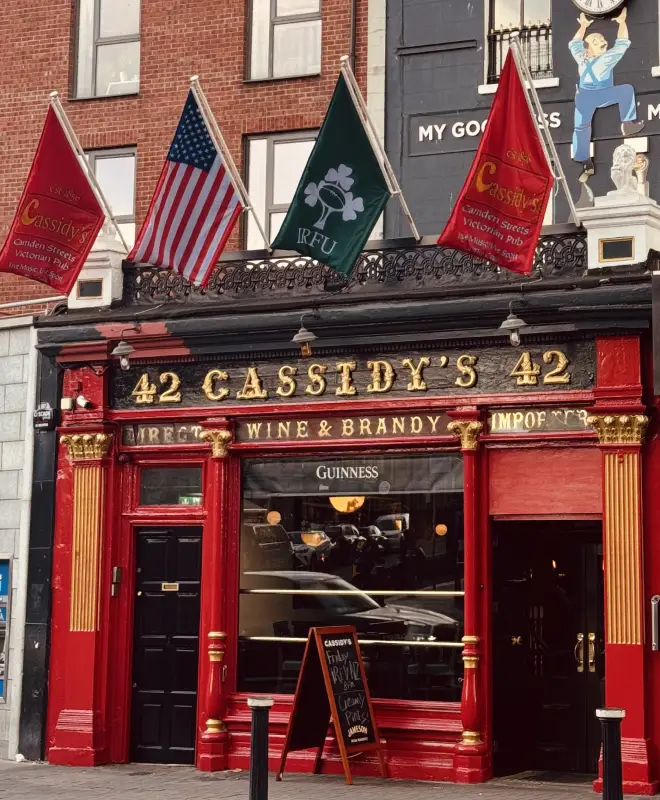
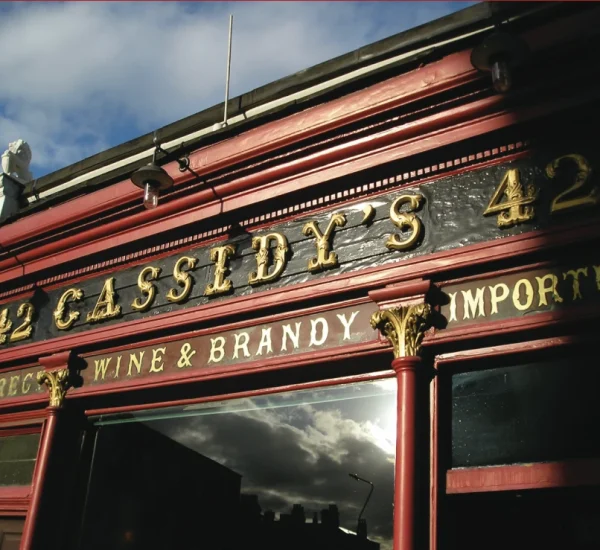
1865 First Licence at no. 42 Lower Camden Street
In 1865 local family grocer and publican, Thomas Doyle, acquired a licence on this site which had previously served as a dressmakers and hair stylist outlet. Thomas Doyle, a grocer by profession, was now allowed to sell alcohol courtesy of the 1862 agreement between grocers and publicans who formed the L.V.&G.A. (Licensed Vintners and Grocers Association). For decades prior to this the grocers and publicans had been bitter enemies as the grocers were facilitating the practice of dram drinking, which amounted to allowing their customers consume spirits illegally in an on-trade capacity hidden behind screens. As a consequence of this merger, publicans could now legitimately stock grocery items and grocers would be allowed to sell alcohol in an on-trade capacity, provided they met certain criteria. Thomas Doyle increased both his business and his customer base in the following years to the extent he now held a most respectable street valuation of 30 guineas. His brother Maurice, availing of local customer goodwill, opened a butcher’s shop two doors up at no. 44.
Thomas Doyle to Joseph Delahunt 1882
By the 1880s the prosperity of Camden Street and also of Dublin itself had increased immensely. Better wages, low inflation, the growth of travel and a spirit both of consumer confidence and investment had boosted the second city of the Empire. The Dublin pub and grocery trade was a huge beneficiary with a greater variety of goods and choice available to the customer. A new climate of adventure was evident, and Camden Street was in the vanguard of this movement. This was the deciding factor that motivated aspiring businessman Joseph Delahunt in 1882 to make the Doyle family an offer they could not refuse.
Joseph Delahunt represented the new breed of Dublin publican: bright, intelligent, adventurous and forward thinking. Most significantly, Delahunt was a visionary who saw the opportunity to expand into the provisions and grocery market that would induce the affluent Victorian citizenry of Rathmines, Ranelagh, Dartry and Rathgar into his premises. In addition of being a premium outlet publican, Joseph Delahunt’s dream was to create prestige grocery outlets incorporating a comprehensive rage of cooked meats, salami, cheeses, pickles etc. Prior to moving to Camden Street, Joseph along his brother Sylvester had traded from 1-2 Harry Street, which they now placed on the market.
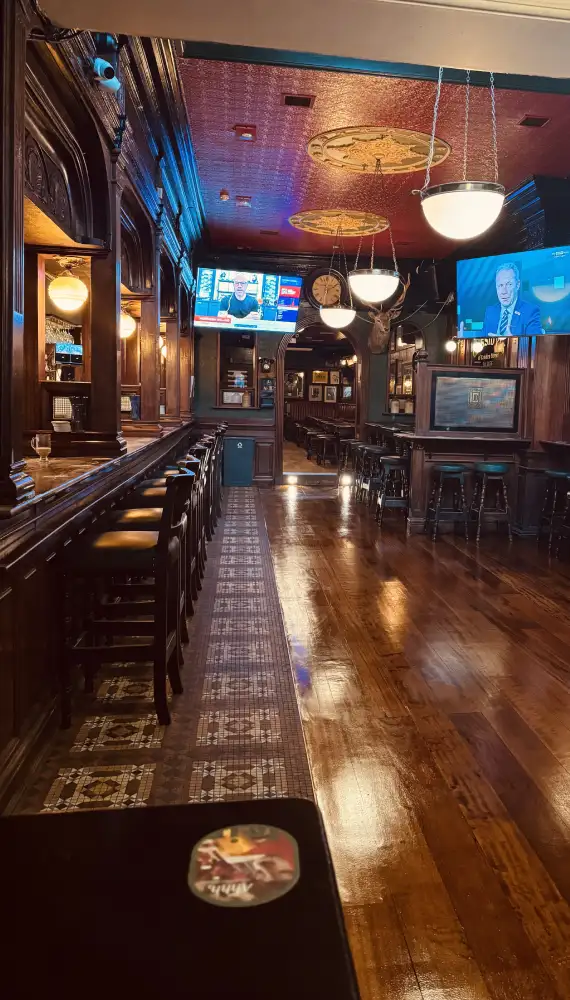
The First Victorian Renovation
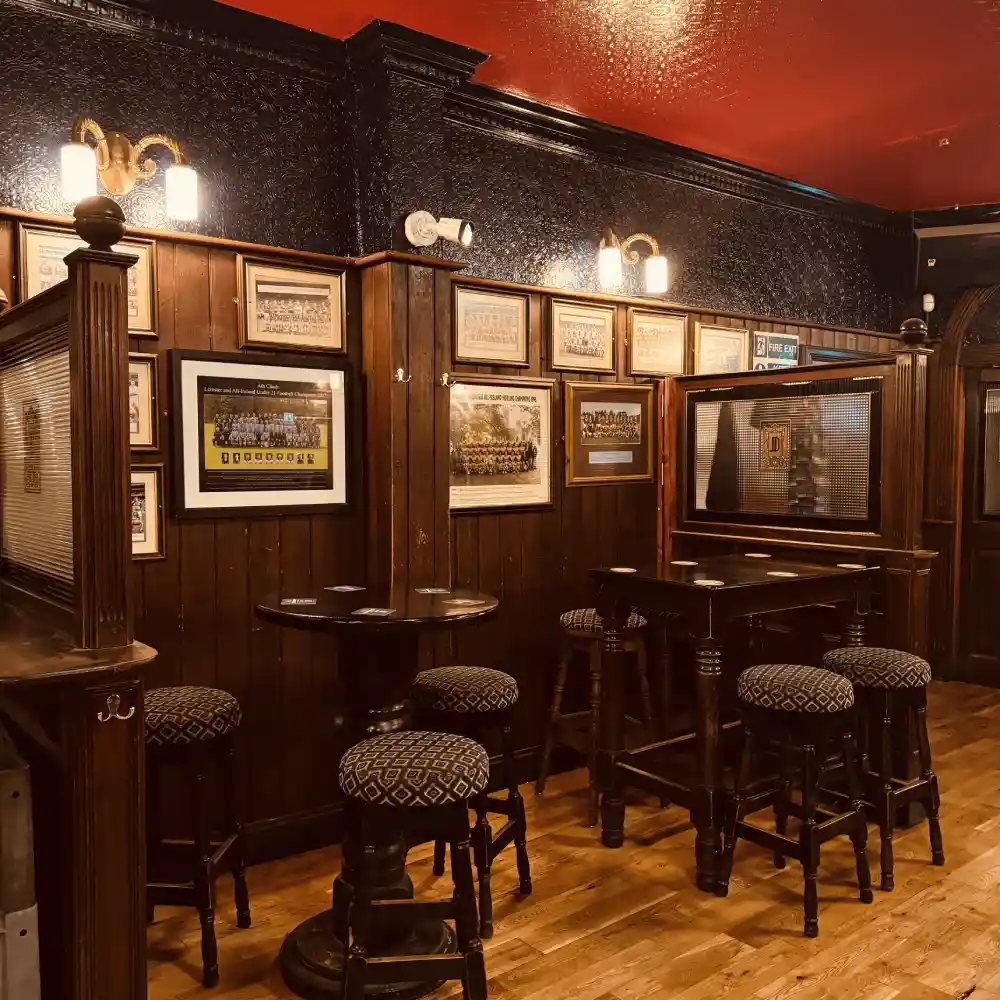
No sooner was Joseph Delahunt in the door than he commissioned the first of two Victorian renovations of this premises. This building, which was a relatively narrow, elongated premises, ideally suited his purposes as he created the Victorian grocery section at the front and the pub section at the rear. In this manner, the well-to-do Victorians could buy their refined grocery products in comfort without the intrusion of inebriated punters in their presence. The Victorians, who despised the public consumption of alcohol, ironically drank large quantities of spirits – especially gin – in their homes. However, it was both the quality and storage facilities of tea in Victorian pubs that motivated the public to frequent these premises.
1886 - Joseph Delahunt Expands
Four year later, Joseph Delahunt, overjoyed by the booming success of no. 42, spread his wings and additionally purchased no. 92 Camden Street, which was a much larger premises and suited to his expanding grocery offering, which now encompassed an outside catering service. On a daily basis, Delahunt moved to and fro between his premises installing his brother Sylvester as front-of-house man at no. 92. But Joseph Delahunt’s influence was also growing in the public domain as he became an increasingly influential member of the Irish Nationalist Party who supported Ireland’s ‘uncrowned king,’ Charles Stewart Parnell, and the Home Rule Movement. He also became involved in local politics and was elected to Dublin Corporation becoming Alderman Joseph Delahunt after the 1902 Elections.
Twice Chairman of the LVA
Delahunt’s great range of contacts, influence and experience made him a very capable voice within the LVA or LV&GA (Licensed Vintners and Grocers Association), as it was then known. He was particularly successful and efficient in reforming the licensing laws that hitherto had discriminated against publicans in favour of temperance movement restrictions.
He was elected Chairperson of the Association on two occasions, 1897 and 1902. Around the turn of the 20th century, Joseph Delahunt executed his second Victorian renovation of this premises, the content of which has been largely preserved to the current day, thus establishing Cassidy’s as one of Dublin’s heritage Victorian pubs.
Bloomsday 1904 and the Joycean Connection
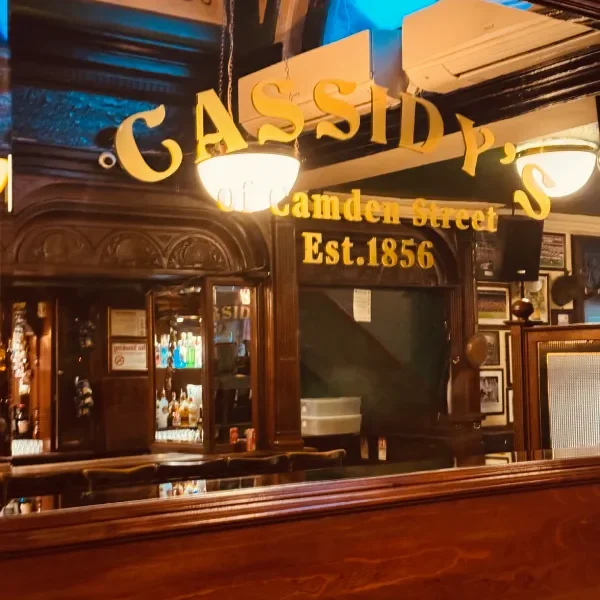
While there are many pubs in Dublin that claim tenuous connections with James Joyce and Ulysses, Cassidy’s is a notable exception. James Joyce was a regular here, or as close to a regular as Joyce’s wanderings would allow. The reason for Joyce’s patronage of Delahunt’s relates to the immediacy of Camden Hall, and the Irish Dramatic Company, which in 1902 had been formed eight doors down the street at no. 34. Joyce loved theatre, the arts
and music halls within which he himself was an accomplished performer. However, this venue did not always approve of Joyce’s errant behaviour as he was on one occasion ejected from Camden Hall for falling down drunk and looking up the skirts of leading actress, Vera Esposito.
Delahunt’s Enters Literary Fame
Delahunt’s was famous for its own labelled whiskeys and ports back in this era. It was customary for reputable houses to undertake agreements with distilleries and wineries to purchase casks of product, which were then aged under bond until called upon. In the Wandering Rocks chapter of Ulysses, Joyce refers both to Delahunt’s port and their external catering service.
‘He checked his tale a moment but broke out in a wheezy laugh.
But wait till I tell you, he said. Delahunt of Camden Street had the catering and yours truly was chief bottlewasher. Bloom and the wife were there. Lashings of stuff we put up, port wine and sherry and curacao, to which we did ample justice. Fast and furious it was. After liquids came solids. Cold joints galore and mince pies….”
Joyce later refers to Delahunt’s famous port wine.
“Lenehan linked his arm warmly. —But wait till I tell you, he said. We had a midnight lunch too after all the jollification and when we sallied forth it was blue o’clock the morning after the night before. Coming home it was a gorgeous winter’s night on the Featherbed Mountain. Bloom and Chris Callinan were on one side of the car and I was with the wife on the other. We started singing glees and duets: Lo, the early beam of morning. She was well primed with a good load of Delahunt’s port under her bellyband. Every jolt the bloody car gave I had her bumping up against me. Hell’s delights! She has a fine pair, God bless her. Like that.”
Over recent years this Joycean reference of literary illumination has been erroneously associated with the third of Joseph Delahunt’s acquistions, namely no. 39 Lower Camden Street, but this premises was not acquired by Delahunt until some years later, and was therefore not in his possession on Bloomsday 1904, the date on which the entire book is based. Therefore, the two references refer to no. 42 – Cassidy’s.
Delahunt Further Expands
By 1911 Joseph Delahunt enjoyed almost a licensed and grocery trade monopoly on this street as he now operated nos 42, 92 and the new premises at no. 39, which he advertised widely as a ‘High-Class Family Grocer & Italian Warehouse.’ Throughout these years, Delahunt kept an active involvement both in local and national politics during which time he was a confidant of John Redmond, who had succeeded Parnell as leader of the Irish Parliamentary Party. Being a constitutional Nationalist, Joseph Delahunt favoured Home Rule for Ireland but was firmly opposed to the emerging physical force movement of the republicans. But the winds of change were already gathering momentum that would change his known world forever. Indeed, these winds were closer to Delahunt’s door than he imagined because back in 1909 Fianna Èireann had been established down the street at no. 34, the previous location of Camden Hall and the Irish Dramatic Company. Many of the young boys who were enrolled into Na Fianna would later play a prominent part in the 1916 Rising.

Easter 1916 – Delahunt’s Occupied by Irish Volunteers
On Easter Monday, April 24th, 1916 a troop of Irish Volunteers made their way up Camden Street and occupied Davy’s Pub on Portobello Bridge. From this position they engaged the advancing Crown forces from Portobello Barracks, Rathmines, attempting to enter the city. But over the next two days, the greater numbers of the military forced the insurgents to retreat.
“On Monday night, April 26th, a small group of Volunteers took possession of Delahunt’s pub (42 Lower Camden Street). The occupying party was led by Lieutenant Shiels with the aid of George Houston of E Company.”
The above George Houston was in fact a barman at the pub. But as the British forces advanced towards the city, taking possession of the pub, the insurgents left the premises peacefully. But not before the notorious British Officer, Captain Bowen-Colthurst summarily executed a number of civilians including Labour Party councillor, Richard O’ Carroll, a resident of the street, who was also Quartermaster of C Company Volunteers.
Joseph Delahunt’s Claim to Property Losses Committee
Following the Rising a committee was set up to assess property losses, most of which had been inflicted by British forces. Joseph Delahunt made a small claim of £10 -19 shillings (approximately €2700 today) for damage to the premises, which was paid in full. Ironically, barman George Houston, one of the volunteers that occupied the premises during the Rising and who lived above the pub, made a claim for £3 against the looting of his clothes and personal belongings. (See National Archives Original Document)


Joseph Delahunt to Laurence Caulfield
By 1925 the golden and adventurous age of Joseph Delahunt had come to an end as he was succeeded here by Laurence Caulfield, Tea, Wine and Spirit Merchant. Because of the business generated along Camden Street, Caulfield enjoyed the fruits of this lucrative watering hole from which he set up residence in a fine dwelling named Esteril on Temple Road. Camden Street pubs greatly benefited over the following decades from the footfall generated by the numerous street traders and a great passing trade. The advent of local ballrooms, which had a strict no alcohol rule also aided the local pub business. Among the clientele who frequented Caulfield’s in this era were members of the Behan family, who were then associated with the Camden Street traders.
Caulfield to Patrick Cassidy
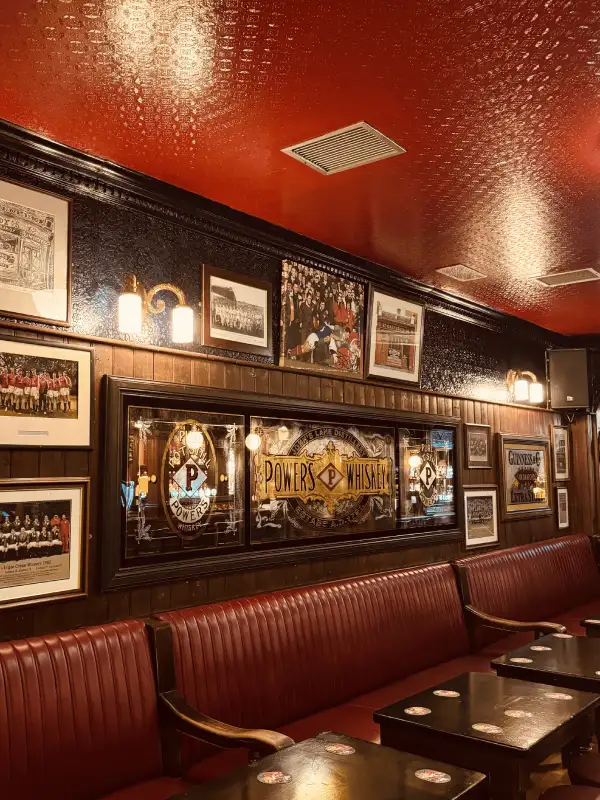
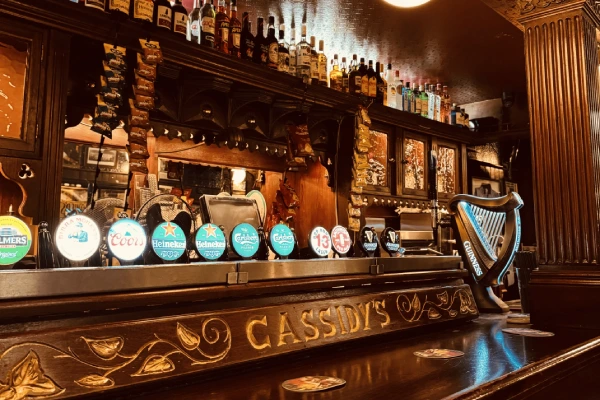
By the mid 1960s the nameplate above the door here had changed to its current famous appellation. Patrick Cassidy, who had succeeded Laurence Caulfield, was somewhat caught between the demands of the contemporary 60s trade and the desire to remain faithful to the ethos of the traditional Victorian pub. In the end, Patrick did both by retaining most of the Victorian pub while also creating a more comfortable lounge bar, the golden child of the 1960s licensed trade.
The Later Decades
Through recent decades Cassidy’s has become a bastion of cultural heritage, story and song, always attracting a convivial and lively clientele.
Cassidy’s was one of the favourite social haunts of one of Ireland’s most gifted journalists, Con Houlihan. Con transformed sports journalism by bringing the back pages of the Evening Press to life by creating equality between the extraordinary and the ordinary events of life. Con was a great imbiber and a forever friend of Cassidy’s.
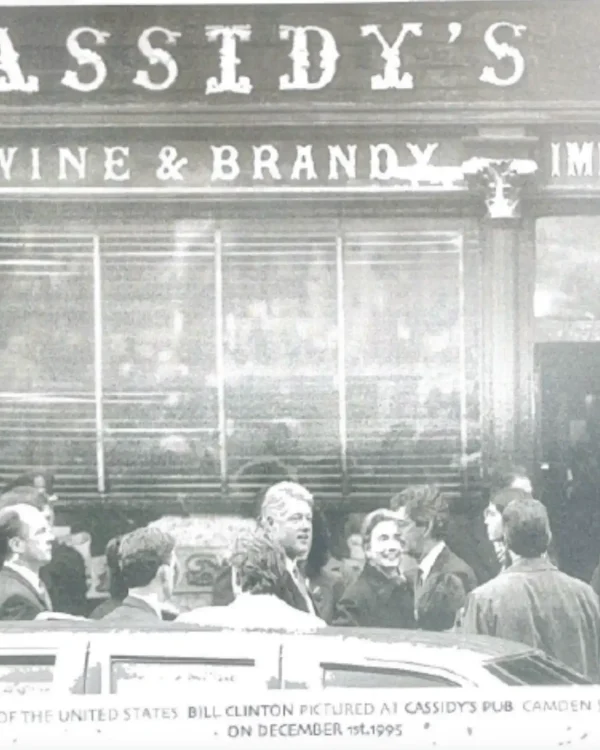
Bill Clinton’s Visit
American President, Bill Clinton, visited Cassidy’s Victorian Pub in 1995 during his second term of office. This gathering had been arranged to celebrate a coming together of the Cassidy clan in Ireland, as Clinton’s own mother was herself a Cassidy, Virginia Dell Cassidy.
Publicans Fran Ryder, Jamesie O’Donnell, and John McCormack have steered the good ship Cassidy’s into contemporary and progressive times while retaining the magical characteristics of this revered watering hole. Today, this old haven of heritage is in the capable hands of the new owners who have 75 years of experience in the bar trade between them. They are looking forward to creating many more years of history.
Few pubs in the annals of Irish licensed history have enjoyed a more illustrious heritage than Cassidy’s…. and the good news is the story grows and grows. The best is yet to come.